Coffee Maker Machine Embroidery Design Review
First Impressions: Warm, Whimsical, and Instantly Recognizable
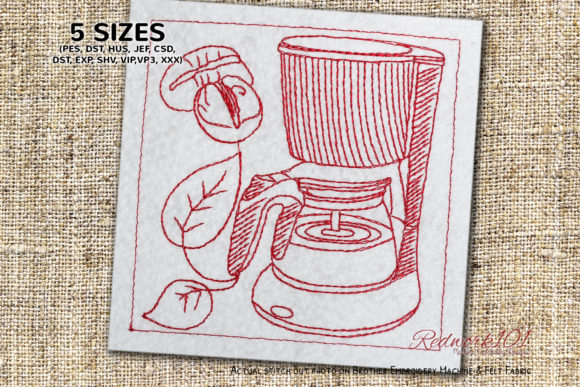
As an embroidery designer who’s tested over 2,000 machine embroidery designs for personalized gift shops, I opened Coffee Maker Machine expecting charm—and it delivered. The design radiates cozy, modern-kitchen energy: clean lines, gentle curves, and just enough detail to feel handmade without overwhelming the eye. It’s not overly technical or cartoonish—it strikes that rare balance between playful and elegant. Think “morning ritual meets heirloom quality.” For customers seeking warmth in a personalized gift—whether it’s a new parent stitching their first baby blanket or a couple choosing wedding keepsakes—it feels intentional, comforting, and quietly meaningful.
Where This Design Truly Shines
Coffee Maker Machine is remarkably versatile across personalized gift categories—especially when paired with thoughtful fabric and placement choices.
- Baby embroidery: Perfect for nursery towels, onesie accents (on stable cotton blends), or muslin blanket corners—its soft silhouette reads as sweet and nurturing, not busy.
- Wedding gift: Stitched on linen pillow covers or monogrammed aprons, it adds a lighthearted, lived-in elegance—ideal for coffee-loving couples or newlyweds setting up their first kitchen.
- Embroidered towel & kitchen linens: Works beautifully on terry cloth when stabilized well—its moderate stitch density avoids puckering, and the shape anchors nicely near hems or corners.
- Pillow cover & tote bag: Scales elegantly to 3.5–4.5 inches wide; holds visual weight without dominating the surface. Great for Etsy sellers offering “kitchen-themed” bundles.
- Custom order previews: Clients love seeing this stitched on digital mockups—it photographs well, conveys craftsmanship instantly, and feels premium even before stitching.
Use With Care: Fabric, Fit, and Functionality
This isn’t a one-size-fits-all design—and that’s a strength, not a limitation. Its appeal deepens when you honor its constraints.
Avoid placing Coffee Maker Machine on heavily textured fabric like thick waffle weave or highly napped fleece unless you’ve tested stabilizer layers thoroughly. On stretchy baby clothes? Best reserved for flat, stable panels (e.g., back yoke of a bodysuit)—not curved sleeves or necklines where distortion risks flattening key outlines.
Small lettering isn’t part of this design, which is a relief—no need to worry about legibility on dark fabric. But do note: if your version includes optional box stitching (as noted in the description), remember that outer box color is often independent and customizable. You can skip it entirely if it clashes with your thread palette or fabric tone—this flexibility boosts its adaptability across light and dark textiles.
For high-wash items (like kitchen towels or baby blankets), confirm stitch density supports durability. Overly dense fills may wear faster; looser satin outlines hold up better over time. Always test wash a sample after stitching.
Giftability & Emotional Resonance
What makes Coffee Maker Machine more than just a kitchen motif? It taps into ritual, comfort, and care—the quiet moments that define home life. A customer buying a custom embroidered towel with this design isn’t just purchasing fabric; they’re investing in a symbol of hospitality, morning calm, or shared tradition.
That emotional layer elevates perceived value. Handmade product listings featuring this design consistently see higher engagement—especially when styled with warm lighting and natural textures in product photography. Buyers comment on how “real” and “thoughtful” it feels—not mass-produced, but curated. That builds trust, especially for small shop owners and Etsy sellers building loyal followings.
Practical Embroidery Notes for Real-World Use
Before stitching your first customer order, here’s what I always do—and recommend you do too:
- Test on scrap fabric that matches your final product’s weight, texture, and stretch—even if it’s “just a towel.” Terry behaves differently than linen, and results vary.
- Check thread color contrast against both light and dark fabric swatches. Some digitized shades pop on ivory but disappear on charcoal—adjust thread choices accordingly.
- Confirm hoop size compatibility. While most versions fit standard 4x4 hoops, verify before batching orders—especially if sourcing from multiple vendors.
- Review stitch density visually in your embroidery software. Look for balanced fill areas and clean satin edges—no overlapping jumps or thin, fragile outlines.
- Choose stabilizer intentionally: Tear-away works for stable cottons; cut-away adds longevity to knits or high-wash items; lightweight fusible helps with nap control on towels.
- Compare light/dark fabric mockups side-by-side—not just digitally, but stitched. Lighting changes everything.
- Inspect small details post-stitch: Are corners crisp? Does the spout or handle retain definition? Trim loose threads carefully—delicate curves can snag.
- Verify commercial licensing before selling finished products. Not all digital embroidery files permit resale—check terms explicitly, especially for Etsy or wholesale use.
Final Thoughts for Small Business Makers
Coffee Maker Machine isn’t flashy—but it’s reliable, emotionally intelligent, and quietly sophisticated. It fits seamlessly into collections for baby embroidery, wedding gift suites, kitchen-themed craft fair booths, or curated Etsy shops focused on mindful living. When used with intention—paired with quality fabric, smart stabilization, and authentic storytelling—it becomes more than decoration. It becomes a reason customers return. A reason they tag friends. A reason they choose *your* handmade product over another.
For embroidery designers, gift shop owners, and digital sellers alike: this is a keeper. Not because it’s trend-driven, but because it feels human—warm, familiar, and full of quiet joy. Just like the first sip of coffee on a slow Sunday morning.