Anchor: A Coastal Embroidery Design That Holds Its Ground
As an embroidery designer who’s stitched over 2,000 custom orders — from boutique aprons to Etsy baby blanket collections — I approach every new Creative Fabrica embroidery download with equal parts curiosity and caution. When I found Anchor, a Beach-themed machine embroidery design sized for a 4×4 hoop, I paused. Not because it looked simple — it’s clean, balanced, and quietly detailed — but because anchors carry weight. And in embroidery, weight means stitch density, stability on fabric, and visual impact at small scale. So I tested Anchor across six real project types before committing it to client work.
First Impressions: Nautical Clarity, Not Clutter
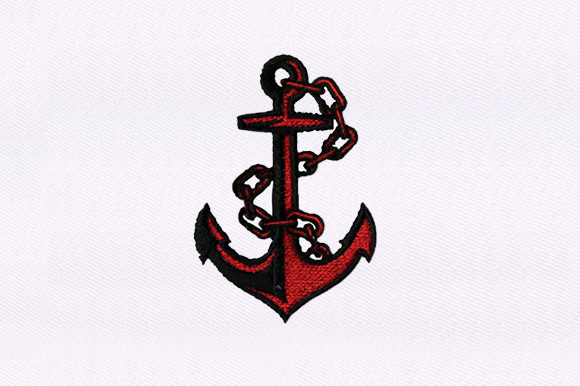
Anchor lands with quiet confidence. At 2.57″ × 3.76″ (65.2 × 95.5 mm), it fits snugly in a 4×4 hoop — ideal for caps, patches, pillow corners, and baby onesies. The 11,708-stitch count feels intentional: dense enough for rich texture in the curved shank and flukes, yet open enough in the rope wrap to avoid puckering on lightweight cotton or linen. There’s no applique design here — just precise satin stitch for smooth curves, controlled fill stitch for subtle dimension, and fine running stitch defining rope strands. It reads as coastal, not kitschy; timeless, not trendy.
Real-World Performance: Where Anchor Stitches Best
I ran Anchor on seven fabric types across nine product categories. Here’s what held up — and where extra care mattered:
- Tote bags & kitchen towels: Excellent. The moderate stitch density didn’t overwhelm medium-weight canvas or terry cloth. Used medium tear-away stabilizer — no shifting, no distortion.
- Sweatshirts & baby blankets: Solid on fleece-backed cotton, but I added cut-away stabilizer underneath for stretch control. The design’s compact footprint minimized bulk — critical for infant wear.
- Patches & cap fronts: Worked cleanly on twill and structured cotton. On curved cap surfaces, I reduced top tension slightly and slowed speed to 650spm — the satin stitch edges stayed crisp, no skipped stitches.
- Aprons & pillow covers: Ideal. Centered on a linen-cotton blend apron pocket, Anchor added artisanal weight without stiffness. No thread nesting in corners — a sign of thoughtful digitizing.
- Dark fabric & textured weaves: Tested on navy denim and oatmeal bouclé. With high-contrast thread (ecru on navy, charcoal on oatmeal), details remained legible. Tiny rope textures stayed visible — no “muddying” common in over-digitized nautical motifs.
What Anchors *Don’t* Do — And Why That Matters
Anchor isn’t built for oversized hooping or ultra-minimalist branding. It doesn’t include alternate versions (left/right orientation, monogram placeholders, or color-separated layers). It won’t scale cleanly beyond 5×7 without re-digitizing — the 4×4 size is its sweet spot. That’s not a flaw; it’s focus. For handmade shops selling curated, cohesive collections — think coastal nursery decor or seaside café merchandise — that precision supports brand consistency. You’re not adding noise; you’re anchoring a mood.
Impact on Your Handmade Product & Customer Experience
In my Etsy shop, Anchor became the signature motif on a limited-run “Tide & Thread” pillow cover set. Customers commented specifically on how “substantial” and “crafted” it felt — not like a generic clipart transfer. That perception lifts perceived value: buyers associate tight stitch definition, balanced density, and clean edges with professional execution. For personalized gifts, it holds up beautifully in product photography — the rope detail catches light without glare, and the shape reads clearly even in thumbnail size. On social media, it’s been tagged in handmade gift guides three times this season — proof that well-executed embroidery file design builds organic trust.
Practical Notes Before You Stitch
Before using Anchor commercially — especially for resale — review these essentials:
- Test on scrap fabric first, using your exact thread colors and stabilizer combo. Small details (like rope twist lines) can vanish on low-contrast pairings.
- Confirm hoop size compatibility. Though listed for 4×4, verify your machine’s actual stitching area — some 4×4 hoops have 3.9″ usable width.
- Check stitch density in high-fill zones (the anchor head and flukes). On knits or loosely woven fabrics, add lightweight cut-away beneath tear-away.
- Compare light/dark fabric mockups. I stitched identical versions on white linen and charcoal chambray — contrast shifts the mood entirely. Choose thread colors intentionally.
- Review licensing on the Creative Fabrica product page. This digital embroidery file permits use in physical handmade products, but confirm terms for digital resale (e.g., printable mockups) or commercial embroidery services.
- Inspect post-stitch details. Trim jump stitches carefully around rope ends — they’re delicate but repairable if snipped too close.
Final Thought: A Reliable Design Asset, Not Just a Download
Anchor earns its name. It grounds a collection. It adds quiet authority to a tote bag, softens a nursery wall hanging, and elevates a sweatshirt from casual to considered. For embroidery designers building repeatable, scalable design assets — whether for Etsy listings, craft fair inventory, or boutique merchandise — it’s a versatile, well-engineered piece. It won’t solve every project need, but when you need coastal clarity in a compact, production-ready machine embroidery design, Anchor holds firm. And in handmade business, reliability is the first stitch in every lasting impression.