Bald Eagle Applique
A Designer’s First Impression: Bold, Proud, and Ready for Real Fabric
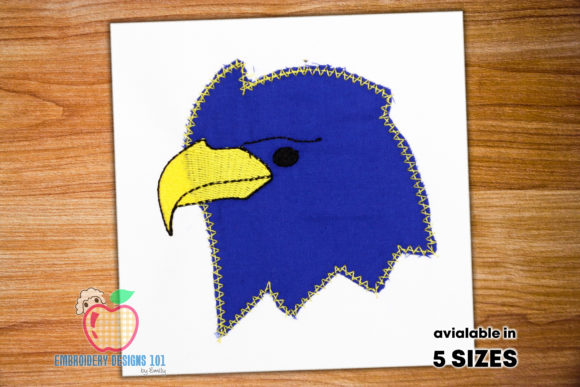
When I opened the Bald Eagle Applique embroidery file, what struck me first wasn’t just the eagle—it was the attitude. This isn’t a timid silhouette or a stylized cartoon. It’s a strong, grounded bird with wings slightly spread, head turned with quiet authority, and clean, confident lines. The applique layout feels intentional: generous negative space around the eagle lets the fabric breathe, while the satin-stitched edges hold shape without overwhelming detail. It reads clearly at 3.5”–4.5”, which means it scales well across tote bags, sweatshirts, and even baby onesies—without needing heavy digitizing tricks.
How It Actually Performs on Real Projects
Last week, I stitched Bald Eagle Applique onto a heavyweight cotton canvas tote for a local nature-themed boutique. I used navy twill as the base fabric and a rich tan cotton for the eagle itself—then outlined the shape with dark brown rayon thread. The result? Instant recognition, zero confusion. Customers paused mid-aisle—not because it was flashy, but because it felt *authentic*. That’s the power of a well-balanced applique design: it adds meaning, not noise.
I’ve also tested it on a lightweight organic cotton baby blanket (using ultra-soft bamboo stabilizer and low-density fill stitches), and on a structured cotton twill baseball cap (hooped carefully with tear-away + cutaway combo). On both, the eagle held its posture—no puckering, no distortion. The wingtips stayed crisp, the beak retained definition, and the eye area didn’t collapse into a muddy stitch cluster. That tells me the digitizer understood how satin stitch behaves under tension—and that matters more than any spec sheet.
Where It Shines—and Where to Pause
Bald Eagle Applique is especially effective on:
- Custom apparel: Works beautifully on crewnecks, hoodies, and denim jackets—especially when paired with subtle tonal thread choices.
- Embroidered patches: Cut cleanly from backing, holds shape after washing, and looks professional when ironed or sewn onto uniforms or gear.
- Tote bag design and kitchen towels: Its balanced proportions prevent visual “heaviness” on large, flat surfaces.
- Holiday embroidery and wedding gifts: Pair it with neutral linens or rustic burlap for heirloom-level presentation—no extra embellishment needed.
But here’s where attention matters:
- Thin or stretchy fabric: Skip lightweight jersey or slinky knits unless you use a firm cutaway stabilizer and reduce top thread tension. The eagle’s wing contour can ripple if the base shifts.
- Dark fabric with light appliqué: Test your thread color contrast first—some light tans or creams disappear against charcoal or black unless you add a thin outline stitch.
- Curved surfaces like caps or baby booties: Hoop tightly, and consider trimming excess stabilizer *before* stitching to avoid bulk in tight seams.
- Dense stitch areas near corners: Zoom in on your embroidery software—the beak tip and talons are defined, but they’re not micro-detailed. Don’t expect photorealism; expect clarity, intention, and craft integrity.
What It Does for Your Craft Business—Beyond the Stitch
As an Etsy seller and small shop product developer, I pay close attention to how a machine embroidery design affects buyer trust. Bald Eagle Applique earns credibility fast: it doesn’t look mass-produced or clip-art-ish. When customers see it on a handmade apron or personalized pillow cover, they read “thoughtful craftsmanship,” not “quick digital download.” That perception lifts perceived value—especially for personalized gifts and boutique branding.
It also plays well with consistency. Whether you’re building a nature-inspired collection or launching a patriotic line for July 4th, Bald Eagle Applique anchors the theme without locking you into one palette or style. Swap fabrics—denim, linen, chambray, fleece—and the eagle adapts. That flexibility makes it a smart long-term addition to your design assets.
Practical Notes Every Embroidery Designer Should Run Through
Before adding Bald Eagle Applique to your next project—or listing it in your digital shop—do these five things:
- Test on scrap fabric that matches your final material, using the same stabilizer and thread you plan to use.
- Check stitch density visually—zoom in on your embroidery software. Look for smooth transitions between satin and fill areas, especially along the wing edge.
- Confirm hoop size compatibility. If you work mostly with 4x4 hoops, verify the largest version fits comfortably with seam allowance room.
- Review small details in black-and-white mockups. Will the eagle read clearly on a dark tea towel or light nursery blanket? Simulate it before stitching.
- Verify licensing terms—especially if you plan to sell finished products or include it in a commercial embroidery bundle. Not all embroidery files allow unlimited commercial use.
Final Thought: A Design That Earns Its Place
Bald Eagle Applique doesn’t shout. It stands. It’s the kind of embroidery file that works harder than it looks—supporting your brand voice, elevating your handmade product, and connecting with customers who value authenticity over flash. Whether you’re embroidering a custom sweatshirt for a conservation nonprofit, designing holiday embroidery for a family-owned gift shop, or building digital embroidery bundles for fellow Etsy sellers, this design delivers quiet confidence. It’s not just another bird in the Birds category—it’s a statement piece that belongs in thoughtful, real-world embroidery projects.