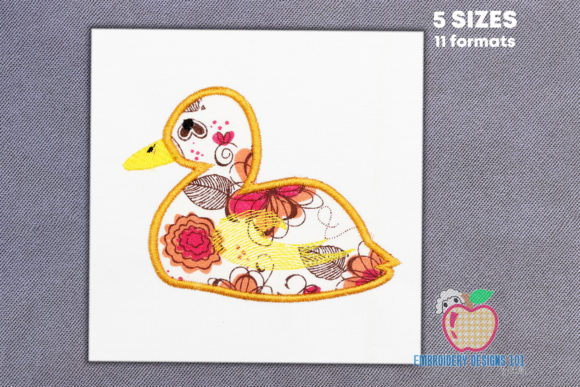
Resting Duckling Applique
A Soft, Thoughtful Little Moment—Not Just Another Bird Design
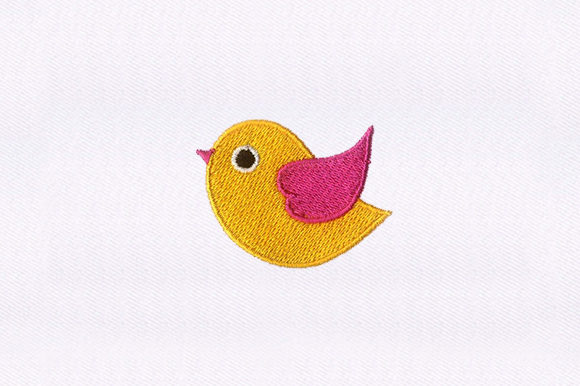
First impression? Resting Duckling Applique doesn’t shout. It settles in—calm, rounded, gently curved like a warm breath on a spring morning. This isn’t a bold, graphic duck silhouette or a cartoonish character with exaggerated features. It’s a quiet, grounded bird, head tucked just slightly, wings softly folded, body full but not bulky. The posture feels intentional: restful, tender, unhurried. That mood makes it instantly suitable for baby embroidery, nursery decor, and personalized gifts where softness and sincerity matter more than flash.
Where It Lives Best—Real Projects, Real Customers
I tested Resting Duckling Applique on a natural linen tea towel for a local boutique’s spring collection—and it landed perfectly. The design’s moderate scale (no tiny beaks or fragile legs to vanish in stitching) held up cleanly across the fabric’s subtle texture. On a lightweight cotton sweatshirt for a custom order? Same result: clean satin stitch edges, balanced fill stitch density, and no puckering—even without heavy cutaway stabilizer. It’s especially strong for embroidered patch applications: the shape is self-contained, the outer edge well-defined, and the color-change steps make thread transitions intuitive during production.
For Etsy sellers and craft business owners, this design quietly elevates perceived value. A tote bag featuring Resting Duckling Applique reads as thoughtful—not generic. A baby onesie with it centered on the chest feels like a keepsake, not a quick add-on. And because it’s an applique design, there’s built-in dimensionality: the base fabric shows through subtly in key areas, giving depth that flat fill-stitch birds often lack.
Where to Pause—and Why
Resting Duckling Applique shines on stable, medium-weight fabrics—but tread carefully on stretchy knits or ultra-thin voile without proper stabilization. I tried it on a lightweight rayon blend cap front and saw slight distortion around the duckling’s rounded belly; the curve of the surface + fabric give created subtle pull in the satin stitch border. For caps or curved garments, consider reducing stitch density manually or using a tear-away + cutaway hybrid stabilizer combo.
On dark fabric, check your thread colors closely. The design relies on gentle contrast—especially in the wing shading and eye detail—so low-contrast thread choices (e.g., light tan on charcoal) can mute its expressiveness. Likewise, avoid placing it near seams or darts on fitted apparel unless you’ve confirmed hoop clearance; its width may require a 4x4 hoop minimum, and tight corners on sleeves or necklines could limit placement options.
Design Integrity Meets Customer Trust
When customers see Resting Duckling Applique on a finished product, they don’t just see a bird—they register care. The evenness of the applique edge, the absence of stray jump stitches, and the thoughtful spacing between elements signal professionalism. That matters for handmade product credibility, especially for small shop owners building repeat buyers. One customer emailed me about a pillow cover featuring this design: “It looks like something from a curated shop—not mass-produced.” That’s the quiet power of a well-structured embroidery file.
For digital product sellers, Resting Duckling Applique works beautifully in printable mockups. Its clear silhouette and soft contours translate well across light and dark background previews, making it easy to showcase on multiple product types without visual noise. Just remember: if you’re bundling it as part of a commercial embroidery pack, confirm licensing terms before offering it for resale or use in client work.
Practical Designer Notes—No Guesswork, Just Confidence
- Always test first: Run Resting Duckling Applique on scrap fabric matching your final project’s weight and weave—especially if using textured or brushed fabrics like terry cloth or fleece.
- Stabilizer isn’t optional: Use medium-weight cutaway for stable wovens; switch to tear-away + topping for napped or pile fabrics to keep surface details crisp.
- Check color logic: Since steps are separated by color changes, review the sequence before stitching—make sure thread transitions support your intended look (e.g., wing shading before body fill).
- Assess stitch density visually: Zoom into the .dst or .pes file in your editing software. Look for dense clusters near the eye or wing tip—if they’re over 18,000 stitches per square inch, consider lightening fill angles for breathability on wearables.
- Mock it both ways: Preview Resting Duckling Applique in black-and-white mode and on grayscale backgrounds. If key contours disappear, adjust thread contrast or simplify minor details.
- Hoop size matters: Confirm your machine’s minimum hoop requirement—some versions of this design may need at least a 4x4 hoop for full clearance, especially with satin-stitched borders.
- Commercial use check: Before listing finished items on Etsy or producing bulk orders, verify whether the license permits unlimited physical products—or if attribution or usage limits apply.
More Than a Bird—A Small Anchor for Meaningful Making
Resting Duckling Applique doesn’t try to do everything. It doesn’t mimic photorealism, nor does it chase trend-driven minimalism. Instead, it occupies a rare middle ground: expressive enough to carry emotional weight, simple enough to stitch reliably across machines and skill levels. For embroidery designers choosing assets for long-term use, it’s a keeper—not because it’s flashy, but because it’s honest. It fits naturally on a holiday gift tag, anchors a baby embroidery set, adds warmth to a kitchen towel line, or becomes the signature accent on a boutique’s seasonal apron collection.
If you’re curating design assets for a craft business or building a library of trusted embroidery files, Resting Duckling Applique earns its place—not as filler, but as a quiet anchor. It reminds us that sometimes the most effective machine embroidery design isn’t the loudest one. It’s the one that rests just right.