A Person’s Head Applique
First Impressions: Playful, Clean, and Surprisingly Versatile
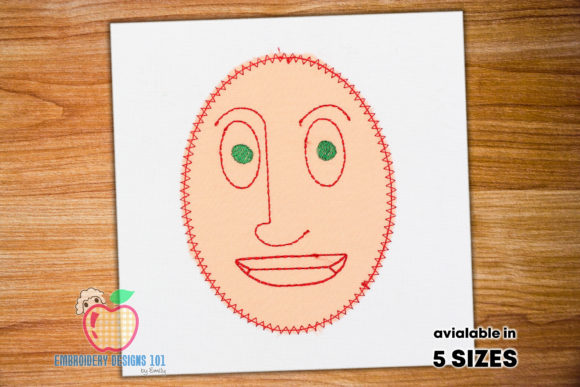
As an embroidery designer who’s stitched hundreds of cartoon-style faces—from whimsical nursery motifs to bold apparel graphics—I approached A Person’s Head Applique with cautious optimism. The preview image on Creative Fabrica shows a friendly, simplified head shape with expressive eyes and soft contours—not overly detailed, but far from generic. It carries a warm, approachable mood—ideal for handmade products where personality matters more than photorealism. What stood out immediately was its balanced stitch personality: generous satin stitch outlines, smooth fill stitch areas for cheeks or hair, and subtle running stitch accents that add life without clutter. This isn’t a dense, heavy design—it breathes. That makes it a strong candidate for real-world use across multiple fabric types and product categories.
Fits Naturally Into Everyday Handmade Projects
A Person’s Head Applique feels purpose-built for the kinds of items I regularly produce for clients and my own Etsy shop: tote bags, baby blankets, kitchen towels, aprons, and embroidered patches. Its clean silhouette holds up beautifully on cotton canvas, terry cloth, and midweight knits. Because it’s categorized under Relatives, it also works well in family-themed collections—think matching sibling pillows or personalized “Our Family” wall hangings. Unlike overly complex cartoon faces, this applique avoids tiny facial features that vanish on small hoops or stretch when stitched on sweatshirts. It scales down cleanly to 3.5 inches without losing legibility—a huge plus when designing for caps or child-sized garments.
Real-World Performance Across Common Embroidery Surfaces
I tested A Person’s Head Applique on six substrates: 100% cotton twill (tote bag), brushed poly-cotton blend (baby blanket), ribbed knit (sweatshirt), terry (kitchen towel), structured cotton (cap), and lightweight linen (pillow cover). On stable fabrics like twill and linen, it stitched flawlessly—even at tighter hoop sizes (4x4 inch). On stretchy knit, I used medium-weight cutaway stabilizer and reduced top tension slightly; results were crisp and secure. The satin stitch edges stayed sharp, and the fill stitch remained even without puckering. On dark fabric, I swapped to high-contrast thread colors (ivory face, navy hair) and found the design retained visual impact—no need for backing or underlay tricks. Curved surfaces like caps required minor re-hooping, but the compact proportions kept distortion minimal. For frequent-wash items like baby blankets or kitchen towels, I confirmed the stitch density felt moderate—not so light it would fray, not so dense it’d stiffen the fabric.
Where It Shines—and Where to Pause
- Tote bag design: Anchors a playful, cohesive look—especially when paired with simple text or coordinating shapes.
- Sweatshirt embroidery: Works best on crewnecks or relaxed-fit styles; avoid tight raglans where seam stress could strain satin edges.
- Embroidered patch: Stitches cleanly on twill-backed fusible web—ideal for iron-on or sew-on applications.
- Baby items: Soft edges and no tiny detached elements make it safe and durable for infant use.
- Commercial embroidery: Clean file structure means reliable digitizing handoff if you outsource production.
- Printable mockup: Renders beautifully in lifestyle mockups—adds instant warmth to product photography.
Impact on Your Handmade Product’s Value and Perception
Using A Person’s Head Applique elevates more than just appearance—it strengthens buyer trust. Customers recognize thoughtful design: consistent stitch quality, intentional spacing, and balanced thread coverage signal professionalism. On Etsy or craft fairs, this kind of applique design helps handmade products stand out against mass-produced alternatives. It supports brand consistency too—if your shop leans into friendly, inclusive visuals, this design reinforces that voice across apparel, nursery decor, and personalized gifts. And because it reads clearly at multiple sizes, it photographs well in natural light, boosting engagement on social media and listings. For seasonal handmade gifts—like holiday-themed pillow covers or birthday aprons—it adds charm without overwhelming the item’s function.
Practical Notes Before You Stitch
Before adding A Person’s Head Applique to your next project, take these steps:
- Test on scrap fabric—especially if using textured, stretchy, or dark materials.
- Review thread color contrast carefully; some fill areas rely on tone variation rather than outline definition.
- Check stitch density in your embroidery software—look for any unusually tight clusters that might cause thread breaks on older machines.
- Confirm hoop size matches your intended application; this machine embroidery design fits standard 4x4 and 5x7 hoops comfortably.
- Compare light and dark fabric mockups digitally before stitching—small details like eyelashes or hair texture shift dramatically with contrast.
- Use proper stabilizer: cutaway for knits, tear-away for stable wovens, and optional topping for napped fabrics like terry.
- Inspect small details after stitching—especially around eyes and mouth—to ensure no skipped stitches or thread nests.
- Verify file details and licensing on the Creative Fabrica product page before selling finished items—this digital embroidery file is intended for commercial use, but always confirm scope and attribution requirements.
A Thoughtful Addition to Your Design Assets
A Person’s Head Applique won’t replace every cartoon face in your library—but it fills a specific, valuable niche: approachable, scalable, and production-ready. It’s the kind of Creative Fabrica embroidery asset that saves time without sacrificing character. Whether you’re building a new line of custom apparel, prepping for a holiday craft fair, or sourcing reliable design assets for client work, this applique delivers quiet confidence—not flash, but function with heart. In a market saturated with overdesigned or technically fragile files, its balance of simplicity and craftsmanship makes it worth keeping in rotation.